
Hantavirus and Mice in Minnesota — What Twin Cities Homeowners Should Know
Hantavirus is rare in Minnesota, but the deer mice that can carry it are common here. This guide explains the real risk, how people get exposed and how to clean up mouse droppings safely.
- Health-First Cleanup
- Licensed Local Technicians
- Free Phone Estimate
- Written Plan Before Work
The Short Version
- Hantavirus pulmonary syndrome (HPS) is a rare but serious illness spread by certain wild rodents.
- In Minnesota, cases are uncommon. Most people who clean up mouse droppings will never be exposed.
- Deer mice are the main carriers in North America, and they do live in Minnesota.
- Exposure usually happens by breathing in dust from droppings, urine or nests in closed spaces.
- Wetting droppings with disinfectant before cleanup, and never sweeping or vacuuming them dry, greatly reduces risk.
This page is general information, not medical advice. If you’re worried about symptoms, contact your doctor. For official guidance, see the Minnesota Department of Health and the CDC.
What Hantavirus Is
Hantaviruses are a family of viruses carried by certain rodents. In North America, the one that causes the most concern is Sin Nombre virus, which is carried mainly by the deer mouse. Infected mice don’t look sick. They shed the virus in their urine, droppings and saliva.
In people, the virus can cause hantavirus pulmonary syndrome. It’s rare, but it can be severe, which is why public health agencies recommend taking simple precautions any time you clean up after wild mice.
How People Get Exposed
The most common route is breathing in tiny particles from dried droppings, urine or nesting material that get stirred into the air. That’s why the riskiest situations involve closed, poorly ventilated spaces that have been shut up for a while, like cabins, sheds, garages, barns and attics.
- Sweeping or vacuuming dry droppings
- Opening and cleaning a closed-up cabin or shed in spring
- Moving stored boxes or firewood with nesting material
- Working in a dusty attic or crawl space with rodent activity
- Less commonly, a bite from an infected rodent
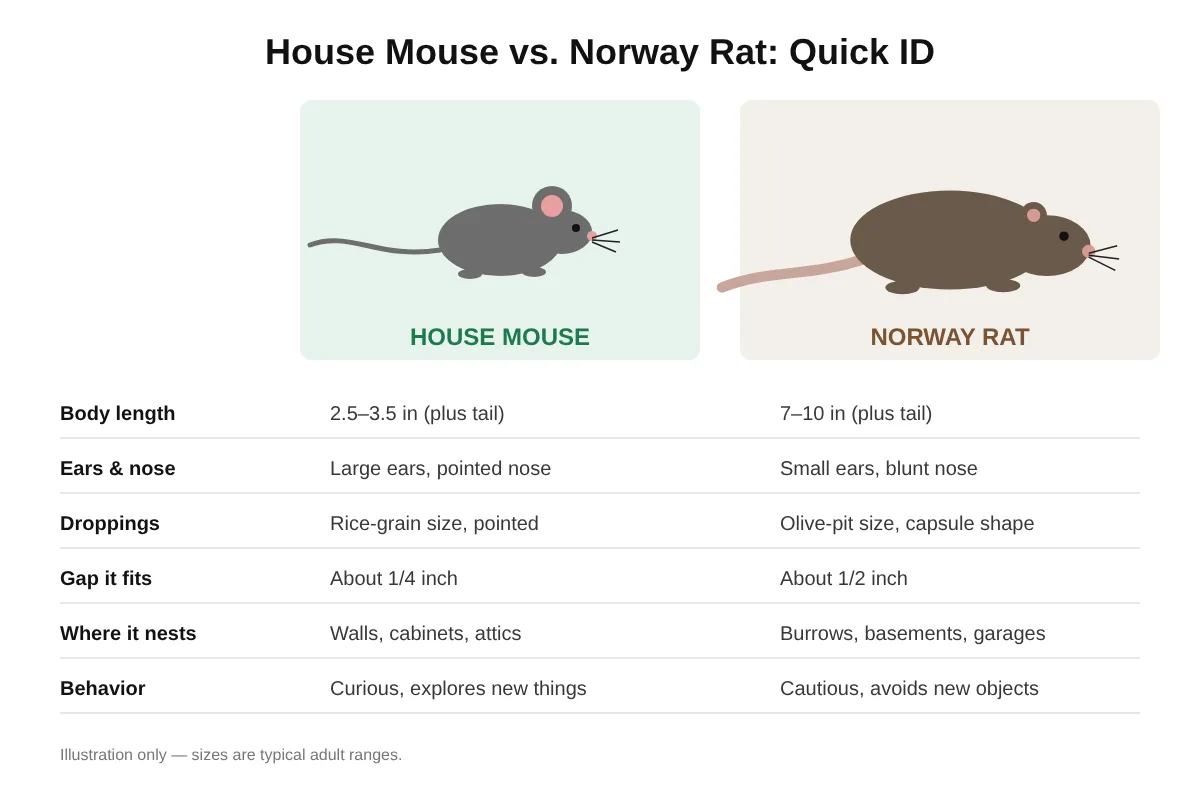
Common house mice are not considered a significant carrier of hantavirus in the United States, but it can be hard for most people to tell a house mouse from a deer mouse. Deer mice have white bellies and feet, a sharply two-toned tail and larger eyes. When in doubt, treat all wild mouse droppings with the same care.
Symptoms to Know About
Early symptoms usually appear one to eight weeks after exposure and can look like the flu: fever, fatigue and muscle aches, especially in the thighs, hips and back. Some people also have headaches, dizziness, chills or stomach problems. Later, coughing and shortness of breath can develop.
If you have these symptoms and have recently been around rodents or their droppings, contact a doctor promptly and tell them about the exposure.
Who’s More Likely to Be Exposed
- People cleaning cabins, sheds or garages after winter
- Homeowners clearing out attics or crawl spaces
- Farm and outdoor workers around barns and grain
- Campers and hunters using closed-up shelters
- Anyone doing heavy cleanup of rodent nests
How to Clean Up Mouse Droppings Safely
These steps follow widely published public health guidance. For large infestations, attics, crawl spaces or anyone with health concerns, professional cleanup is the safer choice.
Do
- Air out the space for at least 30 minutes before you start, with doors and windows open.
- Wear rubber, latex or nitrile gloves.
- Spray droppings, urine and nests with a disinfectant or a bleach solution (about 1 part bleach to 10 parts water) and let it soak about 5 minutes.
- Wipe up with paper towels and throw them away in a sealed bag.
- Disinfect the area again, then wash gloved hands, remove gloves and wash bare hands with soap and water.
Don’t
- Don’t sweep or vacuum dry droppings or nests.
- Don’t use a leaf blower or shop vac to clear a shed or garage.
- Don’t touch dead rodents or droppings with bare hands.
- Don’t start cleaning a closed-up cabin without airing it out first.
- Don’t put off sealing the entry points once it’s clean.
Why Keeping Mice Out Is the Real Answer
Cleanup reduces the risk from droppings that are already there. Preventing new droppings is what really protects your family. That means removing the mice inside and sealing the gaps they use to get in.
Our rodent exclusion service closes entry points with steel mesh, hardware cloth and metal flashing. For contaminated attics and crawl spaces, our attic cleanup team uses wet-cleaning methods, HEPA equipment and protective gear so you don’t have to.
Found droppings in your attic, garage or cabin?
Call → Ask About Safe CleanupHantavirus Questions From Minnesota Homeowners
Is hantavirus common in Minnesota?
No. Cases in Minnesota are rare. But deer mice live throughout the state, so it makes sense to take simple precautions when cleaning up after mice.
Do house mice carry hantavirus?
In the U.S., the main carrier is the deer mouse, not the common house mouse. Since they can be hard to tell apart, it’s best to treat all wild mouse droppings carefully.
Can I get hantavirus from my pet?
Dogs and cats aren’t known to spread hantavirus to people. However, pets can bring rodents into contact with your home, so keep pet food sealed.
Should I hire a professional to clean up droppings?
For small amounts in a well-ventilated area, careful DIY cleanup following the steps above is reasonable. For attics, crawl spaces, sheds, heavy contamination or anyone with health concerns, professional cleanup is safer.
Want Droppings Cleaned Up Safely?
Talk to a local rodent technician about removal, sealing and cleanup.
About Norvane Rodent Control
We focus on one thing: getting mice and rats out of Twin Cities homes and businesses and keeping them out through Minnesota winters. Every job starts with a real inspection, a written plan and a clear price before any work begins.
Our Services
Contact & Areas
- Phone: 090078601
- Email: info@webnewstimes.com
- Hours: 7 days a week, 7am–9pm
- Minneapolis & nearby suburbs:
- Rodent Control St. Paul
- Rodent Control Bloomington
- Rodent Control St. Louis Park
- Rodent Control Richfield
- Rodent Control Brooklyn Park
- Rodent Control Edina
- Rodent Control Brooklyn Center
- Rodent Control Fridley
Disclosure: Norvane Rodent Control is a free referral service. Calls are answered by or forwarded to independent, licensed pest control providers in your area. We do not perform services ourselves, and provider availability, pricing and guarantees vary.