
Our Rodent Control Process — Step by Step, From First Call to a Quiet House
Good rodent control follows a clear order. Here’s exactly what happens when you call us, what you’ll see at each stage and why each step matters.
- Free Phone Estimate
- Licensed Local Technicians
- Same/Next-Day Visits
- Written Plan Before Work
Why the Order Matters
Most failed rodent jobs fail for the same reason: steps get skipped or done out of order. Seal a house before removing the mice inside, and they get trapped in the walls. Trap without sealing, and new mice replace the old ones within weeks. Clean up before removal is finished, and you’ll be cleaning again.
Our process puts each step where it belongs. It’s the same basic sequence for a one-bedroom condo or a large older home. Only the amount of work changes.
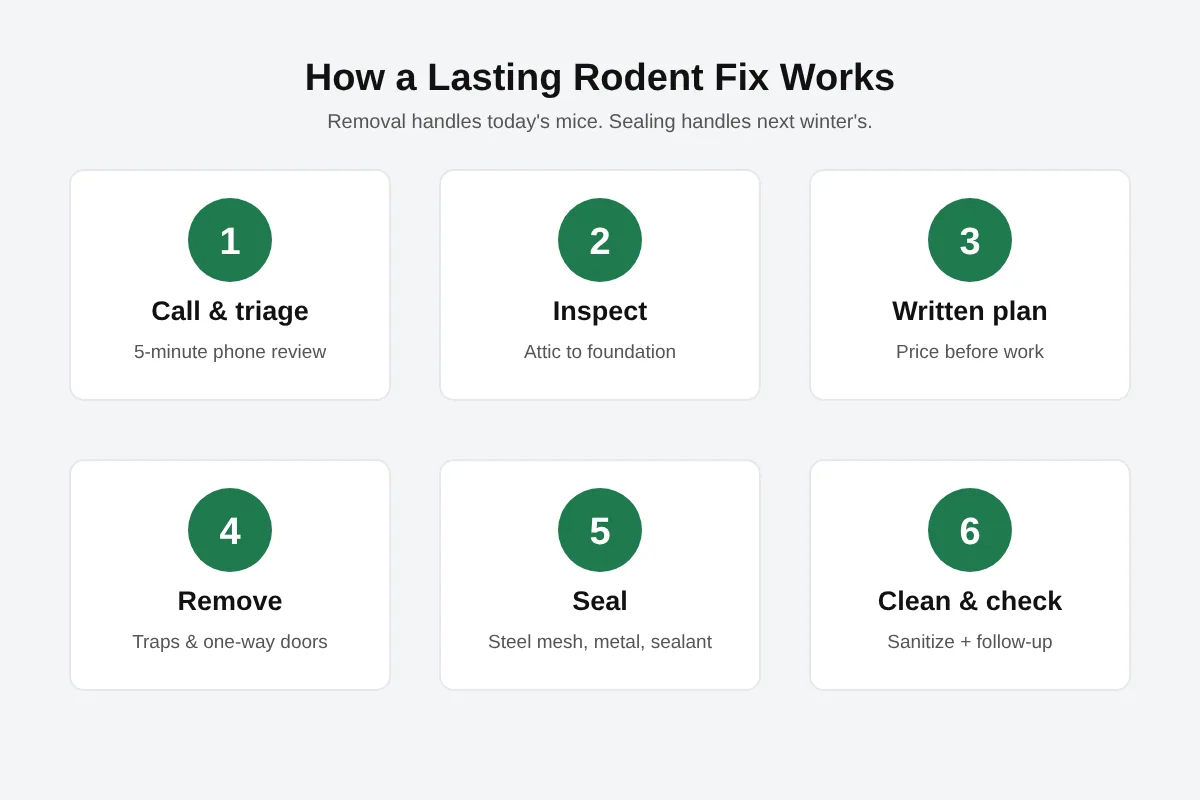
The 6 Steps in Detail
1. Phone Review (About 5 Minutes)
When you call, we’ll ask what you’ve seen, heard or smelled, where in the house it’s happening and how long it’s been going on. Those answers usually tell us whether it’s mice or rats, how established the problem is and whether it’s urgent. Then we set a visit time, often the same or next day.
- What you’ve noticed and where
- How long it’s been happening
- Pets, kids or health concerns we should plan around
2. Full Inspection
A technician walks the entire property: attic, living areas, basement or crawl space, garage and the full exterior from the roof line to the foundation. They’re looking for droppings, rub marks, nests, burrows, chew damage and, most importantly, every gap a rodent could use.
- Photos of each entry point
- Notes on activity levels room by room
- Any damage to insulation, wiring or stored items
3. Written Plan and Price
You’ll get a clear plan that explains what was found, what needs to be done and what it costs. Removal, sealing and cleanup are listed separately so you can see exactly what you’re paying for. Nothing starts until you approve it.
- Findings and photos
- Itemized scope and price
- Expected timeline
4. Removal (Usually Days 1–3)
Traps are placed along active runways in protected stations, away from children and pets. For rats, traps are often pre-baited before being set so the colony gets used to them. One-way exit doors are used where the layout allows. Indoor poison is avoided.
- Professional traps in protected stations
- One-way exits where appropriate
- Exterior locked stations only if needed
5. Sealing (Usually Days 2–7)
Once removal is under way, every entry point is sealed with the right material for that spot: stainless steel mesh, galvanized hardware cloth, sheet-metal flashing, concrete patch and cold-rated sealant. Foam alone isn’t used because rodents chew through it.
- Foundation, sill plate and utility gaps
- Vents, garage doors and roof line
- Burrow barriers for rats where needed
6. Cleanup and Final Check
When activity stops, droppings and nesting material are removed and affected areas are sanitized. Heavier contamination, like attic insulation, can be removed and replaced. A final visit confirms the home is quiet and the seals are holding.
- Dropping and nest removal
- Sanitizing and deodorizing
- Final inspection and warranty details
How Long the Whole Process Takes
| Situation | Typical timeline |
|---|---|
| A few mice, newer home | 1–2 weeks |
| Established mouse problem | 2–3 weeks |
| Rats around the property | 2–4 weeks |
| Attic cleanup and insulation | Add 1–2 days after removal |
| Commercial building | Initial clean-out, then ongoing service |
Timelines depend on how many rodents are inside, how many entry points need sealing and how quickly the rodents take to traps. You’ll get an estimate in your written plan.
Questions About Our Process
Do I need to be home for every visit?
Someone needs to be home for the inspection and any interior work. Exterior sealing and some follow-ups can often be done while you’re out.
Will you use poison in my house?
No, we avoid indoor poison. It often causes rodents to die inside walls, and it can be dangerous for pets and children.
What happens if mice come back after sealing?
Providers in our network typically warrant their sealing work. If activity returns, a technician will come back to find and close the new opening.
Can I skip the sealing and just do trapping?
You can, but it’s usually a short-term fix. Without sealing, new rodents tend to move in, especially each fall.
Ready to Get Started?
Step one takes about five minutes. Call for your free phone estimate.
About Norvane Rodent Control
We focus on one thing: getting mice and rats out of Twin Cities homes and businesses and keeping them out through Minnesota winters. Every job starts with a real inspection, a written plan and a clear price before any work begins.
Our Services
Contact & Areas
- Phone: 090078601
- Email: info@webnewstimes.com
- Hours: 7 days a week, 7am–9pm
- Minneapolis & nearby suburbs:
- Rodent Control St. Paul
- Rodent Control Bloomington
- Rodent Control St. Louis Park
- Rodent Control Richfield
- Rodent Control Brooklyn Park
- Rodent Control Edina
- Rodent Control Brooklyn Center
- Rodent Control Fridley
Disclosure: Norvane Rodent Control is a free referral service. Calls are answered by or forwarded to independent, licensed pest control providers in your area. We do not perform services ourselves, and provider availability, pricing and guarantees vary.